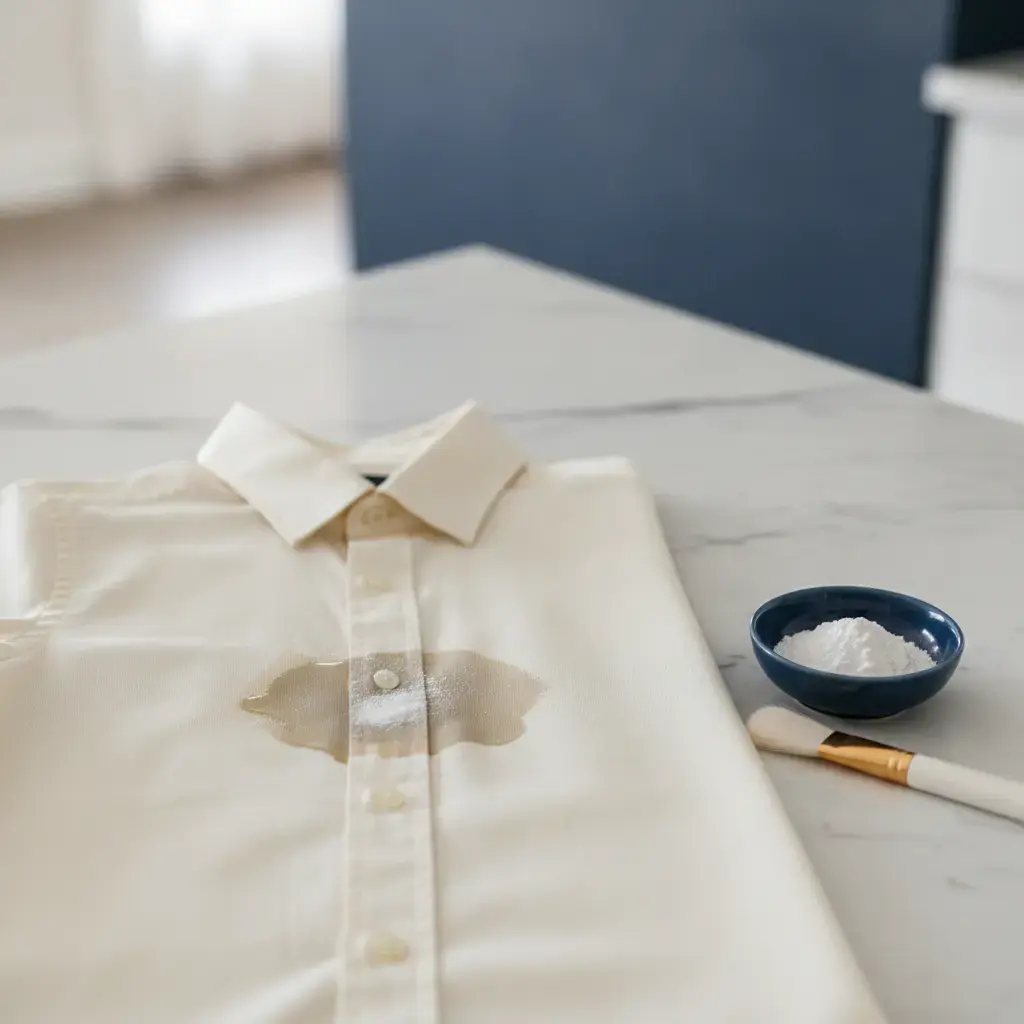
How to Remove Red Wine Stains From Clothes
What you do in the first few minutes decides whether a wine stain comes out or becomes permanent. Here is what actually works, plus the popular remedies that quietly make it worse.
Why Wine Is Such a Difficult Stain
Red wine stains through two mechanisms at once. The color comes from anthocyanins, the pigments that make grapes and berries red, and they bind readily to both cotton and protein fibers like wool and silk. Behind them sit tannins, which are the same compounds that make coffee and tea stain. Tannins oxidize on contact with air, turning progressively browner over time. That is why a fresh wine stain and a two-week-old wine stain are genuinely different problems requiring different treatment. The stain is not waiting for you. It is chemically changing.
The First Few Minutes
Blot with a clean white cloth, pressing straight down to lift liquid up out of the weave, and move to a fresh section of cloth as it picks up color. Do not rub. Rubbing spreads the pigment outward and drives it deeper, and on delicate fabric it abrades the surface so that even a perfectly removed stain leaves a dull patch behind. On washable cotton or a poly blend, flush the back of the stain with cold water to push the wine out the way it came in. Understand that this buys time, it does not finish the job, because the tannins already in the fabric keep oxidizing whether or not you flushed them, and a stain that looks gone on wet fabric often resurfaces as it dries. On silk, wool, or anything labeled dry clean only, stop there. Do not add water, which can leave a ring that is harder to remove than the wine itself. Whatever the fabric, blot it, keep it out of the dryer, and get it to a cleaner while the stain is still fresh.
The Remedies That Do Not Work
Salt is the most popular and the least useful. It absorbs some liquid, but the Good Housekeeping Institute warns it can act the way salt does in fabric dyeing, as a fixative, helping to set the stain rather than lift it. Skip it. White wine does not neutralize red wine. There is no chemistry behind that idea, and in side-by-side tests it lightens the mark while leaving a red shadow behind. Club soda is not doing anything special either. Scientific American has addressed this directly: there is no evidence it outperforms plain water, and any benefit you see is from the blotting and dilution you were already doing. None of these are catastrophic, but they all burn the short window when the stain is still easy to remove.
The Two Things That Genuinely Cause Permanent Damage
Heat and chlorine bleach. Never put a wine-stained garment in the dryer, never iron over it, and never use hot water on an untreated stain, because heat accelerates the oxidation that turns wine brown and bonds it into the fiber. A garment that has been through a dryer with a wine stain on it is a much harder job, and sometimes an impossible one. Chlorine bleach is worse than useless here. It oxidizes the wine pigments into brown compounds, which tends to darken the mark rather than remove it, and it strips fabric dye at the same time. On wool and silk it damages the fiber outright. If you take one thing from this article: no heat, no bleach.
Why We Get It Out When You Cannot
A wine stain is not one stain, and it does not respond to one product. At the spotting board we work it with steam and vacuum to break the bond between pigment and fiber, then apply tannin-specific chemistry, which is acidic, in the correct sequence before the garment ever goes into solvent. Getting that order wrong is what sets a stain permanently, which is precisely the risk with a general purpose bottle from the supermarket. The other advantage is diagnosis. Knowing whether the mark in front of us is still wine or has already oxidized changes the entire treatment.
How Long You Actually Have
Sooner is dramatically better. Treated within a day, most red wine comes out completely. Left overnight the oxidation is underway, and left for weeks in a warm closet the stain browns and becomes significantly harder to lift. There is no precise expiration date, and anyone who quotes you one is guessing, but the direction is only ever one way. If the garment matters to you, do not let it sit.
Blot it, keep it away from heat, resist every instinct to scrub it, and let the chemistry be someone else's problem. Baroni Cleaners has been removing wine, coffee, and other tannin stains in Irvine since 1985, and because pickup and delivery are free, the garment can be on its way to us today instead of oxidizing in a hamper. Call (949) 316-4276 or schedule at baronicleaners.com.
Frequently Asked Questions
Related Services
Need Professional Garment Care?
Schedule a free pickup today. Organic cleaning, 48-hour turnaround, always free delivery.