Shag Rug Cleaning: Reviving a Matted, Greyed Moroccan Style Rug
Written by the Baroni Cleaners team · Family-owned dry cleaning and tailoring serving Irvine and Orange County · See how Baroni works
A 5.3 by 7 foot Moroccan style shag rug came in with its cream pile crushed flat and dulled to grey, the raised hexagon pattern barely readable. Here is why high pile mats and greys in the first place, why rented carpet machines make it worse, how a professional rug wash brings the loft back, and what the job cost at $3.95 per square foot.
The Problem: A Shag Rug Gone Flat and Grey
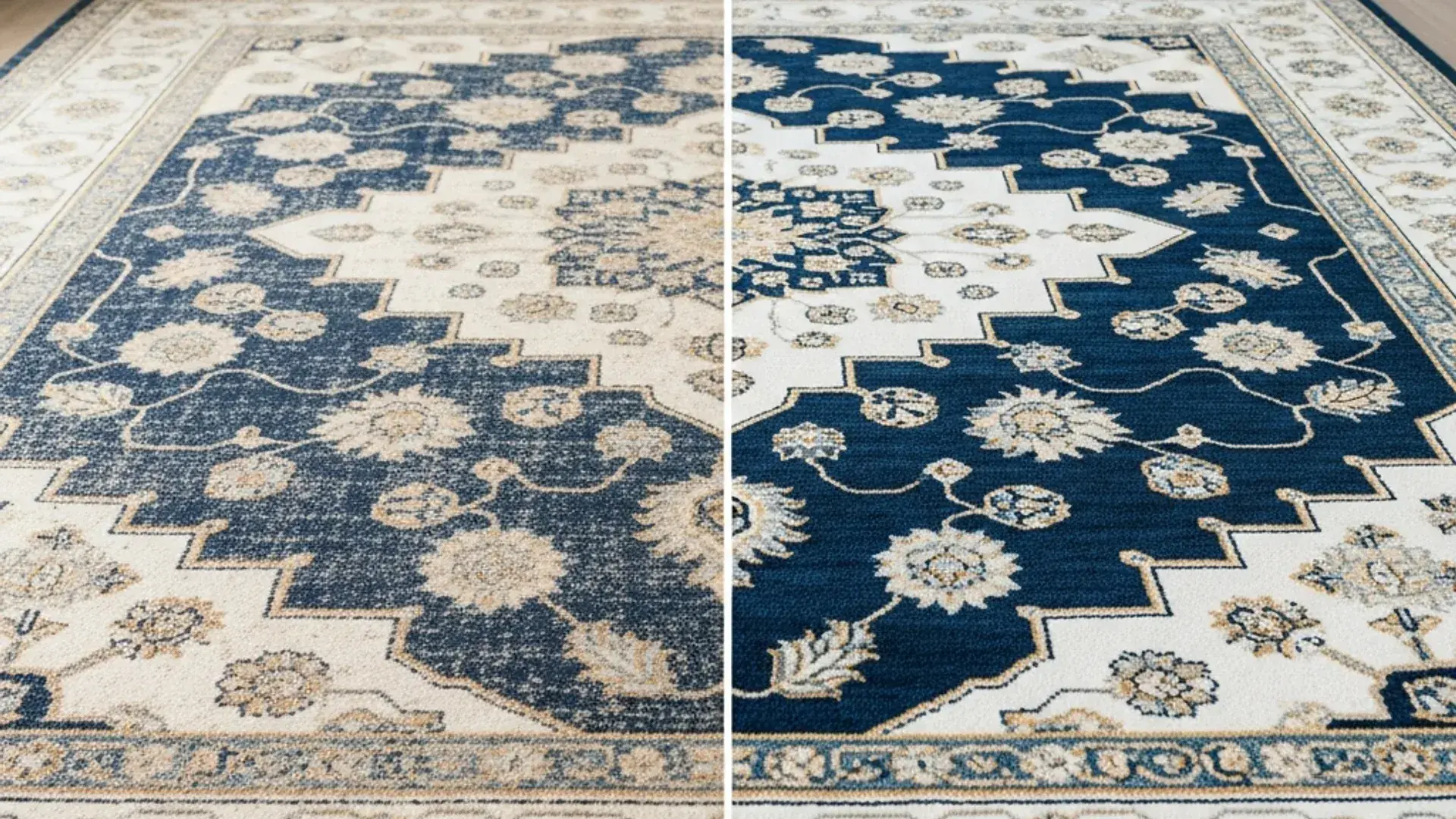
This is a 5.3 by 7 foot Moroccan style shag rug in cream. It has a raised hexagon pattern worked into the high pile, with braided tassels on both ends. New, a rug like this is all loft and texture. That is exactly what daily life takes away from it.
By the time it reached us, the pile had been walked flat across most of the field. The cream had dulled to an uneven grey. The raised hexagons that give the rug its character had lost their definition. Crushed pile and standing pile read as the same surface. The tassels had gone dingy along with the field.
None of this happened in a week. A shag rug degrades so gradually that the owner usually stops seeing it. It takes the furniture moving and a protected patch showing through to reveal what color the rug actually is.
Why High Pile Mats Down and Turns Grey
Two separate things were happening to this rug, and they feed each other. The first is crushing. Every fiber in a rug is spun with a twist that acts like a spring. Repeated foot traffic compresses that twist until the fiber stops springing back. High pile suffers most, because the fibers are long and have the leverage to fold over and stay folded.
The second is soil, and most of it is dry. Sand and grit tracked in on shoes settle down through a deep pile and sit at the base. Every footstep grinds those hard particles against the fibers.
Sharp mineral soil scratches the fiber surface. A scratched fiber scatters light instead of reflecting it, which is why a soiled cream rug reads grey even when nothing was ever spilled on it.
Body oils and cooking residue drifting from the kitchen act as a binder. They glue that particulate to the fiber so a vacuum cannot lift it. Crushed pile traps soil, soil abrades pile, and the rug slides downhill a little more every month it waits.
Why the Home Methods Make a Shag Rug Worse
A shag rug punishes almost every home remedy people reach for. A rented hot water extraction machine is built for wall-to-wall carpet, not a thick area rug. It soaks a deep pile far faster than it can pull the water back out.
A rug that stays wet is in real trouble. Mildew and odor can start within a day or two. Slow drying causes a yellow-brown discoloration cleaners call cellulosic browning. Moisture wicks up through the rug's cotton and jute components and oxidizes at the tips of the pile. It is the same chemistry that browns a cut apple.
Aggressive vacuuming is the other trap. A spinning beater bar grabs long shag fibers and pulls them from the backing. It tangles the pile in ways that do not comb back out. It will eat a braided tassel outright.
Scrubbing a spot by hand distorts the pile and pushes soil deeper into the exact zone you are trying to rescue. Bleaching dingy tassels weakens the cotton and can wick into the surrounding pile.
The honest first aid for a spill on a shag rug is simple. Blot it dry from the top, keep heat away from it, and stop there. Everything past that is a job for immersion equipment and a drying room.
How We Cleaned It: Dust First, Wash Second, Groom Last
A proper rug wash runs in a strict order, and the order is most of the secret. We inspected the rug first, identified the fiber and construction, and tested the dyes in an inconspicuous spot. That told us what the wash could safely do before anything touched it.
Then came the step home methods skip entirely: dusting. Dry soil has to come out dry, because grit that meets water turns to abrasive mud at the base of the pile. We worked the rug mechanically from the back until the embedded sand and particulate stopped coming out.
Only then is it washed, with the method matched to the rug's construction rather than one process for everything. For a tufted shag, that means thorough but controlled moisture that cleans to the base of the pile without drowning the backing.
The braided tassels were cleaned by hand, separately from the field. Fringe is cotton doing its own thing, and it cannot take what the pile can. Drying is controlled, flat, with moving air. The rug is dry in hours rather than the days it would take draped over a patio rail. That slow method is exactly the scenario that invites mildew and browning.
Last comes grooming. We rake the pile in the direction of its nap while it finishes drying. That separates the fibers and stands the pile back up. The raised hexagon pattern casts shadows again.
The Result: Loft and Pattern Back
The after photo is the same rug. The pile stands, and the field reads bright cream instead of grey. The hexagons are legible across the whole rug, because raised and flat texture finally contrast again. The tassels came back white without a drop of bleach near them.
This is the difference between a rug that is old and a rug that was dirty. Until it is washed properly, there is no way to know which one you own.
We always tell you honestly at inspection what a wash can and cannot recover. Crushing from years under furniture legs, and traffic lanes worn into the fiber itself, can be permanent. A cleaner who promises every rug will come back like new before looking at it is not being straight with you. This one came back.
What Rug Cleaning Costs and How Long It Takes
Rug cleaning at Baroni Cleaners is $3.95 per square foot, the same rate for synthetic, wool, Persian, and Oriental rugs. Silk is quoted after inspection.
This rug measured 5.3 by 7 feet, about 37 square feet. The full wash, tassel detail included, came to roughly $147.
That is worth setting against what the rug costs to replace. A matted rug is usually presumed dead long before it actually is.
Turnaround is 1 to 2 weeks, because dusting, immersion washing, controlled drying, and grooming cannot be compressed without cutting the step that matters. Free pickup and delivery is included across Irvine, Newport Beach, Tustin, Santa Ana, and Costa Mesa. A rolled 5 by 7 rug is exactly the kind of awkward item the service exists for. We inspect and quote before any work begins.
How to Keep the Loft Once It Is Back
Vacuum a shag rug with suction only, no beater bar, and skip the tassels entirely. The brush roll is the single fastest way to shed and tangle a high pile.
Rotate the rug a couple of times a year so traffic and sunlight spread their wear instead of carving a lane. Blot spills immediately from the top of the pile and resist the urge to scrub.
Put the rug on a professional wash schedule instead of waiting for it to look bad. By the time a cream shag visibly greys, the grit has been grinding at the base of the pile for a long while.
Professionals generally recommend a wash every 12 to 18 months. Go more often than that with kids, pets, allergies, or a rug parked in the busiest room of the house.
Baroni Cleaners has washed area rugs for Orange County homes from our Irvine shop since 1985, from Moroccan shags to Persian and Oriental wool. If your rug has gone flat, grey, or dingy, do not run a rental machine over it and do not write it off as worn out. Call (949) 316-4276 or book a free pickup at baronicleaners.com and we will inspect it, tell you honestly what a wash will recover, and quote it before any work starts. Rug cleaning is $3.95 per square foot with free pickup and delivery across Irvine, Newport Beach, Tustin, Santa Ana, and Costa Mesa, and first-time customers save 10 percent with code BARONI10.
Frequently Asked Questions
At Baroni Cleaners in Irvine, rug cleaning is $3.95 per square foot for synthetic, wool, Persian, and Oriental rugs. A standard 5 by 7 rug is 35 square feet, which comes to about $138, and the 5.3 by 7 Moroccan shag in this case study came to roughly $147 including hand-cleaned tassels. Newport Beach zip codes are $4.49 per square foot. Every rug is inspected and quoted before work begins, and free pickup and delivery is included across Irvine, Newport Beach, Tustin, Santa Ana, and Costa Mesa on orders over $20.
Usually yes. Most of what reads as a worn-out shag rug is crushed pile and embedded soil rather than destroyed fiber. A professional wash removes the dry grit at the base of the pile, washes out the oily film binding soil to the fibers, and then grooms the pile in the direction of its nap during controlled drying, which stands the fibers back up and restores the loft. The honest exception is true wear: traffic lanes where the fiber itself has abraded away, or pile crushed for years under furniture legs, can be permanent. A rug cleaner should inspect the rug and tell you which situation you have before quoting the work.
Grey on a light rug is usually accumulated dry soil, not a stain. Sand and grit tracked in on shoes settle to the base of a deep pile, and foot traffic grinds those hard particles against the fibers, scratching the fiber surface so it scatters light instead of reflecting it. Body oils and airborne cooking residue then bind that particulate to the fiber where a vacuum cannot reach it. Because the change happens gradually, most owners only see how far it has gone when furniture moves and reveals a protected patch of the original color. A professional wash that removes the dry soil first, then the oily film, typically brings the color back.
It is a bad idea. Rental hot water extraction machines are designed for wall-to-wall carpet and will overwet a thick area rug far faster than they can extract the water back out. A rug that stays wet risks mildew and odor within roughly a day or two, and slow drying causes cellulosic browning, a yellow-brown discoloration that wicks up from the rug's cotton and jute components as they oxidize. The machine's brush head can also pull and tangle long shag fibers. Professional rug washing removes dry soil before any water is used, controls how much moisture the rug sees, and dries it flat with moving air in hours instead of days.
Professionals generally recommend a full wash every 12 to 18 months for a rug in regular use, and more often for households with kids, pets, allergies, or a rug in a high-traffic room. The interval matters because the soil that does the real damage is dry grit grinding at the base of the pile, which builds invisibly long before the rug looks dirty. Between washes, vacuum a high-pile rug with suction only, keep beater bars and the tassels apart, rotate the rug so wear spreads evenly, and blot spills promptly instead of scrubbing them.
Related Services
Need Professional Garment Care?
Schedule a free pickup today. Organic cleaning, 48-hour turnaround, always free delivery.